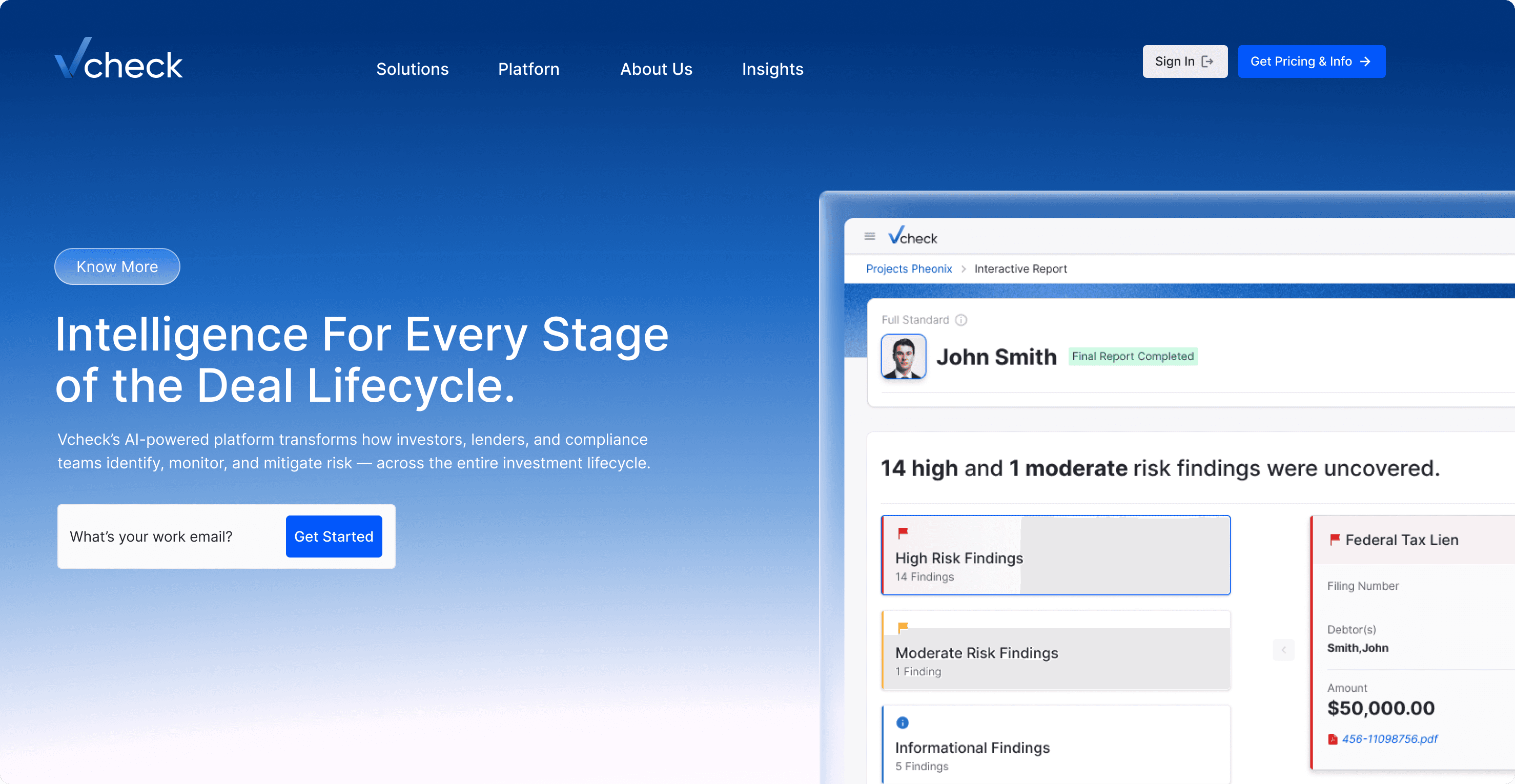
As the Lead Brand Designer at Vcheck, I was responsible for shaping and scaling the company’s visual presence across marketing, product, and client communications. During my first year in a full-time role, I evolved the existing identity into a more modern, SaaS-focused system by introducing gradients, dark-mode applications, and a refined typographic direction using Montserrat. I established brand guidelines and applied them across digital, product, and campaign work to create a more polished and consistent experience.

Overview

Brand Guidelines
I built a structured visual system that could be used consistently across teams and platforms. This included expanding the color palette, defining typography and layout standards, and creating reusable templates for common use cases. The goal was to make the brand easier to apply while giving it a more current, product-driven feel.
Marketing & social launch
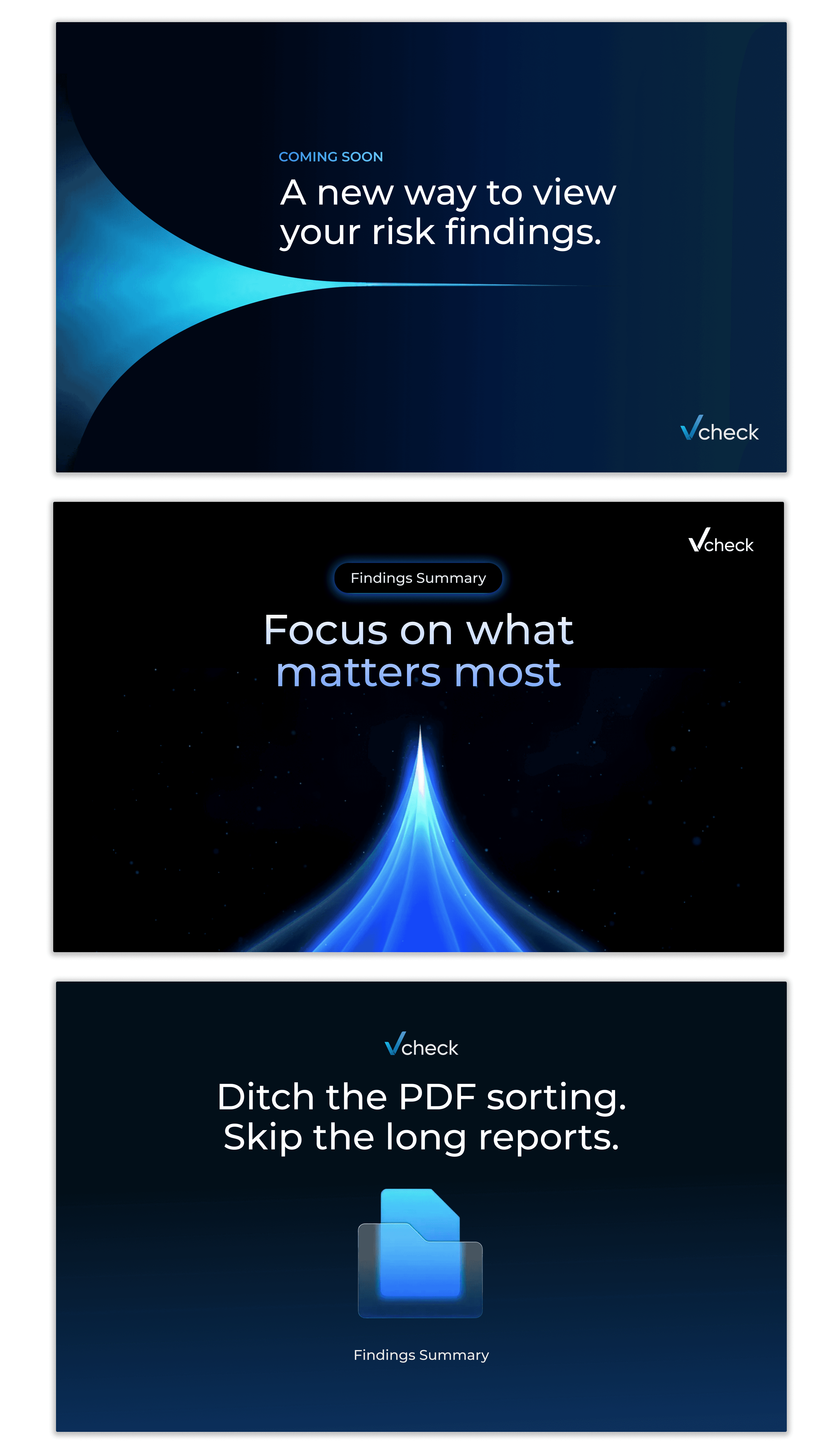
I designed day-to-day marketing assets as well as major campaign and launch materials across social and email. This included static graphics, product visuals, and motion design created in After Effects to support announcements and new feature releases. Email campaigns reached over 15,000 recipients and maintained strong engagement, with open rates between 19–21% and click-through rates up to 2.27%.
Sales & Product
I partnered closely with sales and product to support both client-facing and internal needs. For sales, I created custom proposals, pitch decks, and pricing materials for a 20-person team. On the product side, I contributed UI assets and helped support the launch of Interactive Reports, while also improving and standardizing investigator report templates used by approximately 200 investigators worldwide.


Outcome
Improved layouts and clearer visual structure led to a ~20% increase in investigator report adoption across global teams. I also designed email campaigns that reached 15,000+ recipients, consistently seeing 19–21% open rates and click-through rates as high as 2.27%. Together, this work helped improve usability internally while driving stronger engagement across marketing communications.